MAGNAFLUX 01-1732-87 Method Flors 45
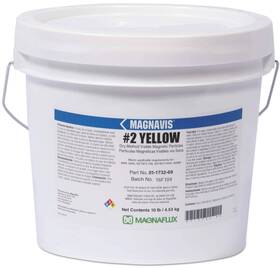
( Brand: Magnaflux ), ( Manufacturer Part Number: 01-1732-87 ), ( Item Weight: 48.0000 )
Review MAGNAFLUX #2 Yellow 45 Lb Dry Method Non-flors. Materials Each
The Magnaflux 01-1732-87 45 Method Non-Flors is a high-performance, liquid penetrant inspection (LPI) system designed for precision non-destructive testing (NDT) of ferrous and non-ferrous materials, offering reliable detection of surface and near-surface discontinuities such as cracks, porosity, and seams. This system utilizes a post-emulsifiable, water-washable penetrant formulation that combines efficiency with ease of use, making it ideal for industrial applications where thorough inspection is critical. The 45 Method designation indicates its compliance with ASTM E1417-18, which specifies a 45-minute minimum dwell time for the penetrant to fully permeate and reveal defects, ensuring consistent and accurate results across various substrates. The Non-Flors variant is specifically formulated without fluoroscopic dyes, eliminating the need for fluorescent lighting and allowing for inspection under standard white light, which simplifies workflows in environments where UV lighting is impractical or unavailable. This system is particularly well-suited for heavy industry, aerospace, automotive, and manufacturing sectors where surface integrity is paramount, such as weld inspections, forging analysis, and component quality control. Its robust formulation resists evaporation and contamination, maintaining sensitivity even in challenging conditions, while its non-corrosive properties ensure safe handling and minimal environmental impact. The Magnaflux 01-1732-87 45 Method Non-Flors is engineered for durability and performance, delivering clear, high-contrast indications that enhance defect visibility and improve inspection accuracy, making it a trusted choice for professionals demanding precision and reliability in their NDT processes.
### **Pros and Cons of Buying Magnaflux 01-1732-87 (45 Method Non-Flors)**
#### **Pros:**1. **High Sensitivity and Detection Capability** The Magnaflux 01-1732-87 is designed for magnetic particle inspection (MPI), which is highly effective at detecting surface and near-surface cracks, inclusions, and discontinuities in ferromagnetic materials. The 45 method (angle of magnetization) provides thorough coverage, reducing the likelihood of missing defects.
2. **Versatility in Application** Suitable for a wide range of industrial inspections, including welds, castings, forgings, and machined parts. This makes it a valuable tool for quality control in manufacturing, construction, and maintenance sectors.
3. **Durability and Reliability** Magnaflux products are known for their robustness, ensuring consistent performance over extended use. The non-fluorescent (non-flors) version is particularly useful in environments where UV light is not available or where fluorescent dyes may interfere with other inspections.
4. **Non-Destructive Testing (NDT) Compliance** Meets industry standards (e.g., ASTM E1444, MIL-STD-194) for MPI, making it a trusted choice for compliance-driven inspections.
5. **Ease of Use** The system is designed for straightforward operation, reducing training time for technicians. The 45 method is particularly user-friendly for detecting longitudinal and transverse defects.
6. **Cost-Effective for Large-Scale Use** While the initial investment may be significant, its longevity and efficiency can reduce long-term inspection costs by minimizing false readings and rework.
7. **Portable and Field-Deployable** Many Magnaflux units are designed for on-site inspections, allowing for flexibility in industrial settings where parts cannot be moved to a lab.
---
#### **Cons:**1. **Limited to Ferromagnetic Materials** MPI is ineffective on non-ferrous metals (e.g., aluminum, copper, titanium) and non-metallic materials, restricting its applicability in certain industries.
2. **Surface Preparation Requirements** The material must be clean and free of contaminants (oil, grease, rust) for accurate results. Poor surface prep can lead to false positives or missed defects.
3. **Operator Skill Dependency** While the 45 method simplifies inspection, improper technique (e.g., incorrect magnetization angle, insufficient demagnetization) can lead to inaccurate results. Training is essential.
4. **Demagnetization Challenges** Residual magnetism can interfere with subsequent processes (e.g., welding, machining). Proper demagnetization equipment may be required, adding to operational costs.
5. **Environmental and Safety Considerations** Some MPI methods (e.g., wet particle inspection) require water-based dyes, which may not be suitable for all environments (e.g., outdoor inspections in cold weather). Dry particle methods (like the non-flors version) avoid this but may require more frequent reapplication.
6. **Limited Depth of Penetration** While effective for surface and near-surface defects, MPI does not detect subsurface flaws (e.g., deep internal cracks), which may require other NDT methods (e.g., ultrasonic testing).
7. **High Initial Cost** The Magnaflux 01-1732-87 is a premium product, and the full system (including yokes, demagnetizers, and consumables) can be expensive upfront. Smaller operations may find this prohibitive.
8. **Maintenance and Calibration Needs** Like all NDT equipment, it requires regular maintenance and calibration to ensure accuracy. Neglect can lead to unreliable results.
---
### **Conclusion:**The **Magnaflux 01-1732-87 (45 Method Non-Flors)** is a high-quality, reliable tool for magnetic particle inspection, particularly well-suited for industries requiring thorough surface and near-surface defect detection in ferromagnetic materials. Its versatility, sensitivity, and compliance with industry standards make it a strong choice for quality assurance in manufacturing, welding, and maintenance. However, its limitations such as material compatibility, surface prep requirements, and the need for skilled operators must be carefully considered.
For businesses dealing primarily with steel, castings, or welded structures where surface defects are critical, this unit offers excellent value. Conversely, operations working with non-ferrous materials or requiring deep internal inspections may need to supplement it with other NDT methods.
---
### **Recommendation:** **Buy the Magnaflux 01-1732-87 if:**- Your workflow involves frequent inspections of ferromagnetic materials (e.g., steel, iron, some alloys).
- Surface and near-surface defects are a primary concern (e.g., welds, forgings, machined parts).
- You prioritize compliance with industry standards and need a durable, high-sensitivity tool.
- Your team is trained or willing to invest in training for MPI techniques.
- Budget allows for the initial investment, considering long-term cost savings from reduced rework.
**Avoid or Consider Alternatives if:**- You work primarily with non-ferrous metals (e.g., aluminum, copper), in which case liquid penetrant testing (LPT) or eddy current testing may be more appropriate.
- Your inspections require deep internal flaw detection, as MPI alone will not suffice.
- Your operation lacks the resources for proper surface preparation, demagnetization, or operator training.
- Cost is a major constraint, and a lower-cost MPI system or rental option might be more feasible.
For optimal results, pair this unit with complementary NDT methods (e.g., ultrasonic testing for subsurface flaws) and ensure proper training and maintenance protocols are in place.
Details:
MATERIALS, Country of Origin: USA, This listing is for Each. Magnaflux - 01-1732-87 #2 Yellow 45 Lb Dry Method Non-flors. Image is an illustration, may not reflect the exact product sold. Materials, Each: 683.28: #2 YELLOW 45 LB DRY METHOD NON-FLORS.
Manufacturer Magnaflux, Mfr Part 01-1732-87, Weight 48.00 UPC.
part #: 01173287 prices
- $703.67-$843.76
specifications cleaningsupplyio:
- brand: Magnaflux
- mpn: 01-1732-87
- item weight: 48.0000
returns cleaningsupplyio:
- method: Money back
- paid by: Buyer
- time: 30 Days
- policy: Returns Accepted
seller cleaningsupplyio:
- city: USA
- rating: 98.2%
- # reviews: 542
general cleaningsupplyio:
- condition: New
- Home Garden > Household Supplies Cleaning > Cleaning Products
shipping cleaningsupplyio:
- class: Standard, Expedited, One-day
- transit: 3-5 Days
- service: Standard, Expedited, Overnight
- type: Fixed
- cost: $108.00
payments cleaningsupplyio:
- wallet: Apple-pay
- other
- credit card: Visa
offer cleaningsupplyio:
- availability: In Stock
- options: Ship-to-home
- started: March 15, 2026
- sold: 0
- quantity: 4